Fstoppers ââ“ Mike Kelleys Where Art Meets Architecture 3
With countries dishing out mandatory quarantines and work grinding to a halt, virtually of united states of america photographers have constitute ourselves with quite a scrap of downtime. If you're sick of watching Tiger King and doing puzzles, now would be a corking time to kick dorsum, turn on a tutorial or two, and option upwards some new skills.
I saturday down and watched all of the large architectural photography tutorials to salvage you time and money. Information technology seems like anybody and their mother is an "educator" these days, and nothing sucks more than than buying an expensive tutorial but to discover it wasn't what yous expected or needed to larn. Now, infused with all the knowledge of the greats, I'll walk you through what each architectural photography educational form is well-nigh, the general way and clientele you lot tin hope to achieve by putting the techniques into do, besides as another general details, including what I liked — and disliked — most each form.
When it comes to architectural photography tutorials, there are two principal hubs, PRO EDU, and Fstoppers. PRO EDU sports two architectural photography tutorials: Barry Mackenzie's Real Estate Photography and Retouching tutorial, and Tony Roslund's Compages Photography and Retouching tutorial. In the Fstoppers camp is Mike Kelley's Where Art Meets Compages serial, made up of three split up courses that build on i another and evolve over time.
Comparison these tutorials is like comparing apples to oranges. Each is best suited to a specific sub-genre of architectural photography. Think of this review, not as a conclusion of which is "best," but more as a route map for where to start and what is worth watching depending on where you are in your career.
disclaimer
while apalmanac was founded by mike kelley whose tutorials are reviewed hither, the opinions expressed in this article are entirely my ain. i promise to be ruthlessly impartial. scouts accolade. – Lexi
PRO EDU
PRO EDU makes tutorials for a pretty vast array of photography topics. While kind of clunky in the past, the new PRO EDU platform and streaming service makes watching their tutorials a breeze.
Both "Real Estate Photography & Retouching" and "Architecture Photography & Retouching" are $199 apiece for an outright purchase, or you tin can view them as part of their streaming PRO Program subscription, which costs $399 per yr but gives you access to unlimited tutorials. If you do make up one's mind to subscribe for unlimited tutorial access, I've found their Advanced Texture Cleanup & Commercial Retouching classes pretty helpful for architectural photography post-processing. PRO EDU frequently runs sales and incentives, so if you time things right (especially right now during their "flash relief" sale), yous tin go an incredible bargain where each tutorial is $100 off.
Real Estate Photography & Retouching
Real Estate Photography & Retouching is taught by Barry Mackenzie, an awesome architectural & interiors photographer who was voted real manor photographer of the year by PFRE. Barry is also the host of the BAAM Podcast which interviews architectural photographers and dissects their processes.
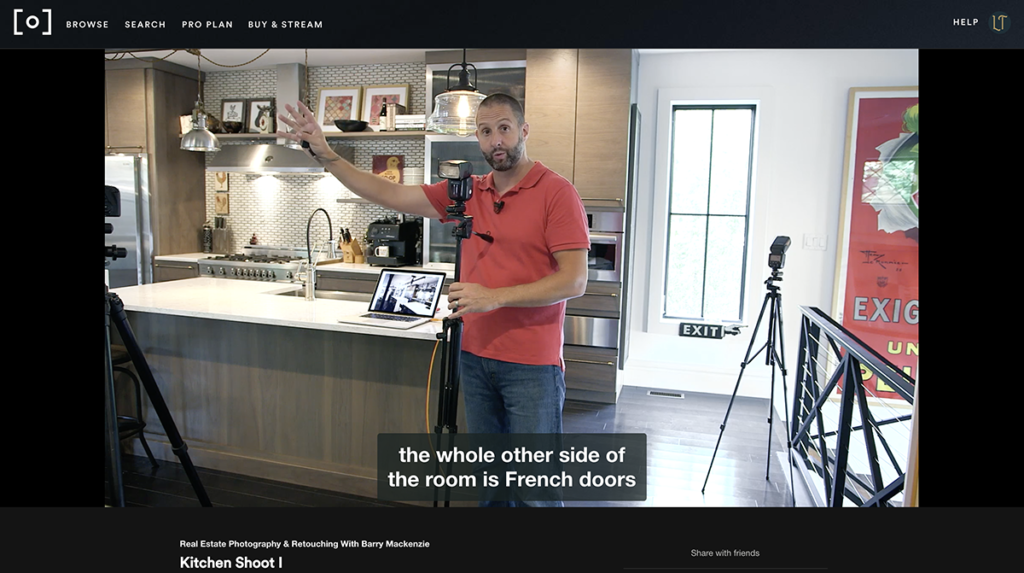
Barry's tutorial is a great introduction to the world of real estate photography. It likewise sets up some fundamentals that will allow you to move into architectural work one day (particularly his retouching techniques). Barry has a great personality and is fun to watch. He is a thorough teacher and explains things in layman'southward terms. There'southward no secrets or B.Due south. here. You go to see his total procedure for shooting a home for a real estate list.
Gear
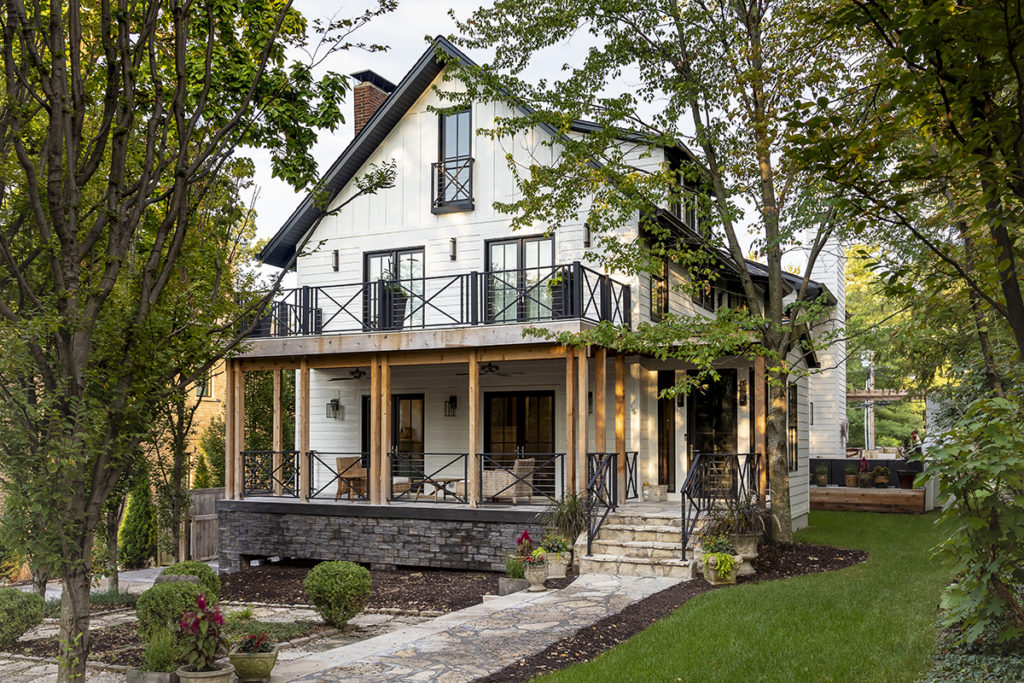
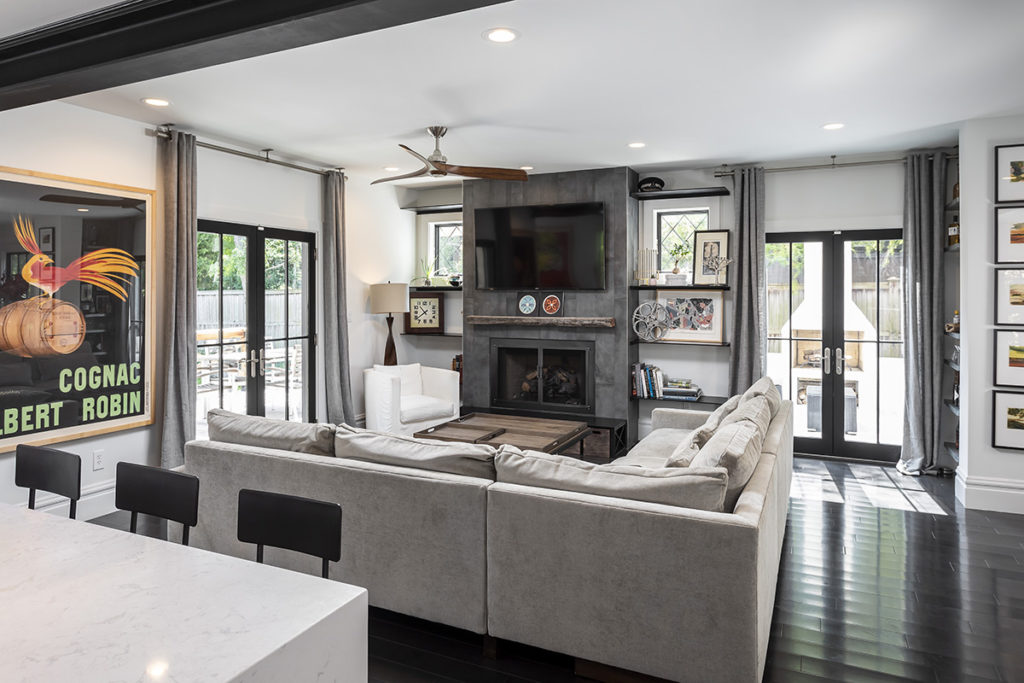
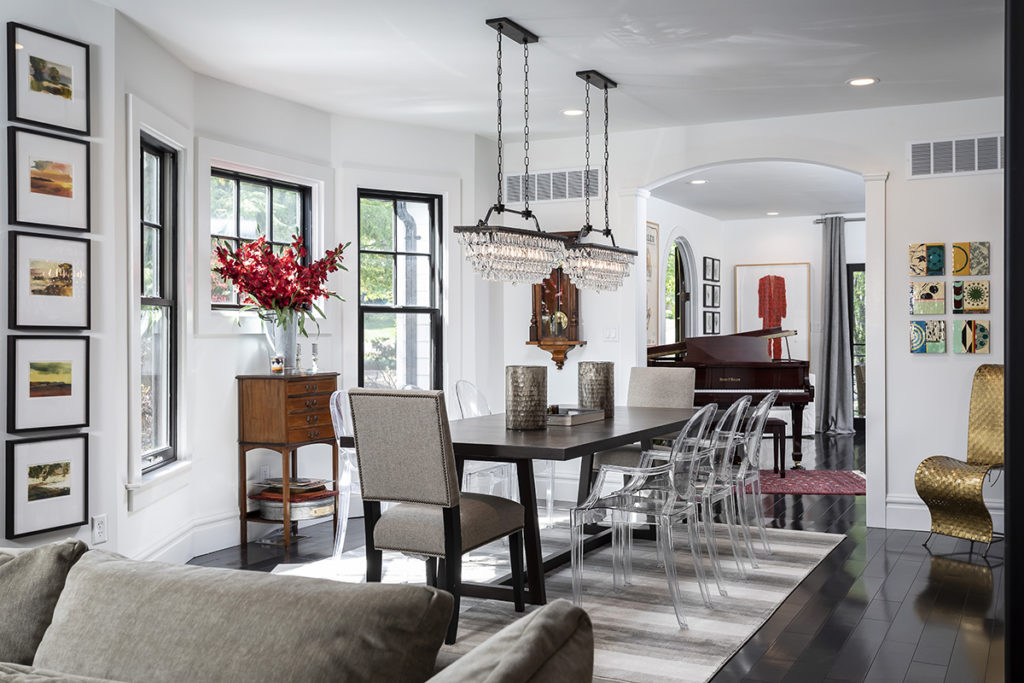
What's nice about getting started with this tutorial is that Barry's equipment set-upwards requires minimal gear. Heck, he'south using a Canon EF 17-xl f/4L lens and teaches how to pull off a faux tilt-shift effect. If you're new to this entire field of photography and looking to dip your toe into existent estate work with a relatively small investment in terms of gear, start hither. You tin likewise look to see him using a Canon 5dMKIV and a few speedlights.
Aesthetic and Approach
Barry's approach is less fussy but sets yous upward with the fundaments to get out there and brand money while creating real estate photos that wait practiced.
Stylistically this tutorial teaches how to make punchy, well-lit images suited for real manor.
Noteworthy Skills and Techniques Learned
- Showing how spaces connect in a home
- Tips for lighting tight powder rooms
- Top-Downwards lighting
- How to do quick and easy styling when y'all're all by yourself on location
- Using gradients in post-production
- File direction and commitment for MLS
- Finding clients
- Bonus material including sample contracts and checklists for real estate photography
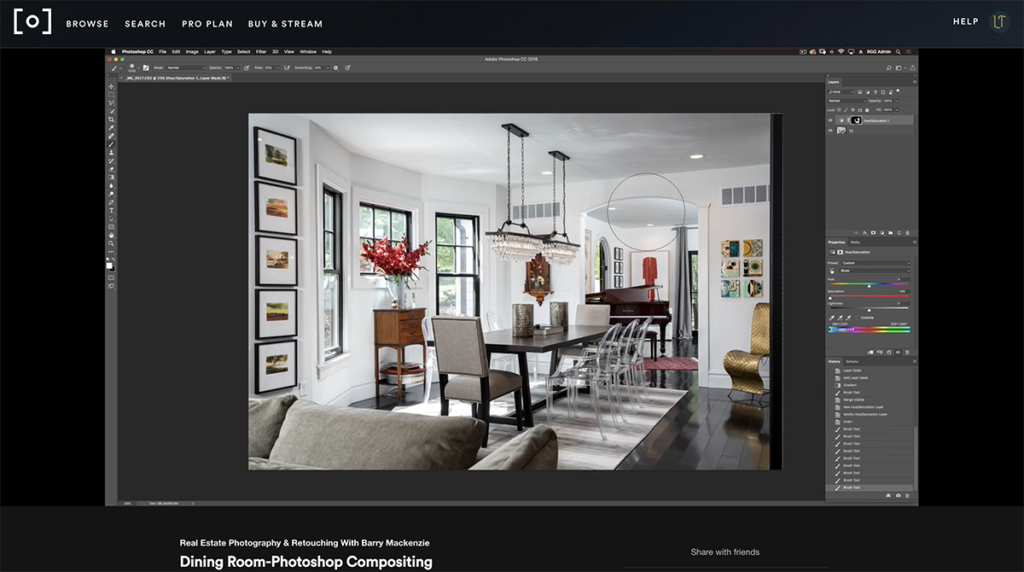
Mail service Processing
The master technique you lot pick up in Barry'due south tutorial requires blending two or three images together, so this tutorial is a perfect introduction to Photoshop compositing for real manor and architecture. Information technology likewise goes over:
- Full general lightroom adjustments and file selection
- How to harness gradients to create subtle and relatively natural-looking edits
- Editing out distractions
- Dealing with color casts
Existent Estate Photography & Retouching includes the RAW paradigm files for you to follow along with in the editing portion, also as the JPEGs of Barry's concluding edit for you to written report and compare your work to.
Format
This tutorial can be downloaded if purchased outright by PRO EDU. It can likewise be streamed on the PRO EDU app or website, which makes information technology super like shooting fish in a barrel to watch, whether you lot're at your desk, on your telephone, or a tablet. Another awesome feature is the ability to watch the course with subtitles on, which I LOVE. Equally mentioned higher up, The Existent Estate Photography & Retouching course includes the raw files to edit along with, too as Barry's Terms and Conditions sheet and a Property Prep Guide for sharing with agents and homeowners to go everybody's expectations on the same page.
Shortcomings
I have two complaints, the biggest being that this tutorial just shows these techniques in Ane location — and information technology's a good one. This class walks united states through a big, cute, well-staged domicile. Most of us getting our bearings in the real estate photography world are going to be shooting in contractor grey flips or dimly lit ranchers filled with chocolate-brown paneling at first. Y'all know the one. So while I'chiliad being picky, I do think information technology would have been absurd to see Barry use his techniques in various homes (even if they weren't ugly), showing united states how to overcome challenges that nosotros may face up on a typical real manor shoot.
In the same vein, I volition say that in the PRO EDU advertisements for this course on social media, and the trailer video, you run into a lot of Barry'southward other projects, which do sport a more clean and luxurious feel than the images of this one house that you lot're learning to make in this tutorial. I found that a trivial misleading. On the flip sided though, Barry does lay the foundation for tidy mail-processing here and expounds on it a bit more than in the PRO EDU tutorial with Tony Roslund. Plus, if you lot follow Barry on Instagram @swizzler, he oftentimes posts quick but informative stories on the more granular aspects of his current and ever evolving shooting and post processing style.
Bottom Line
Barry is a great teacher, and I'd recommend this tutorial for those who are inbound the earth of real estate photography and are looking to differentiate themselves from the HDR way photos we see filling the market. This tutorial is great for those who prefer the flashier side of the flambient technique, and allows y'all to move through a property pretty quickly while still getting swell and unique images. While you can commonly always learn something new from any tutorial you lot picket, if y'all already have your bearings as an architectural photographer, you can probably skip this one.
Architecture Photography and Retouching
Architecture Photography & Retouching is a tutorial taught by Tony Roslund AND Barry Mackenzie. Tony is an architectural photographer specializing in shooting corporate and commercial spaces with perfect render-similar quality.
Bated from the obvious benefits of learning to shoot and edit perfectly sparkling images for corporate and commercial architecture, this tutorial has 2 awesome "bonus" side effects. If you're interested in working closely with an assistant (or how to exist a good assistant for that affair), Tony and Barry's relationship and devision of responsibilities here is very cool to meet. The tutorial as well shows some best practices and the general work period of working with an outsource editor — whether you lot are the 1 hiring the job out, or if yous are the editor yourself.
Gear
Tony works with a adequately small yet loftier-quality kit. In this tutorial, yous can expect to see Tony sporting a Catechism 1D-X, a range Catechism tilt-shift lenses, Profoto B1s, besides as Profoto A1s, scrims and flags.
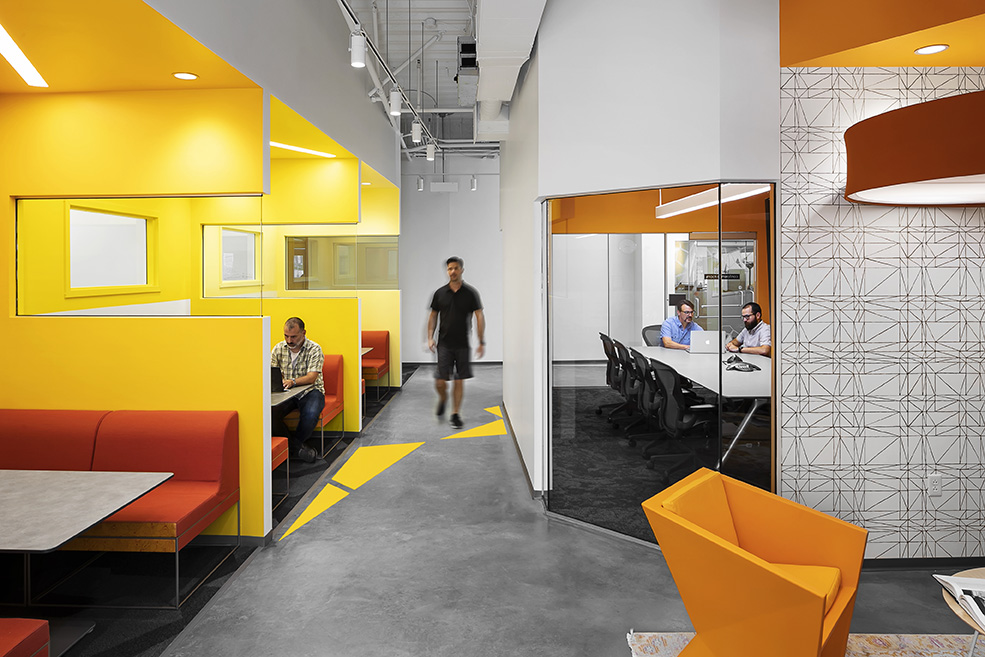
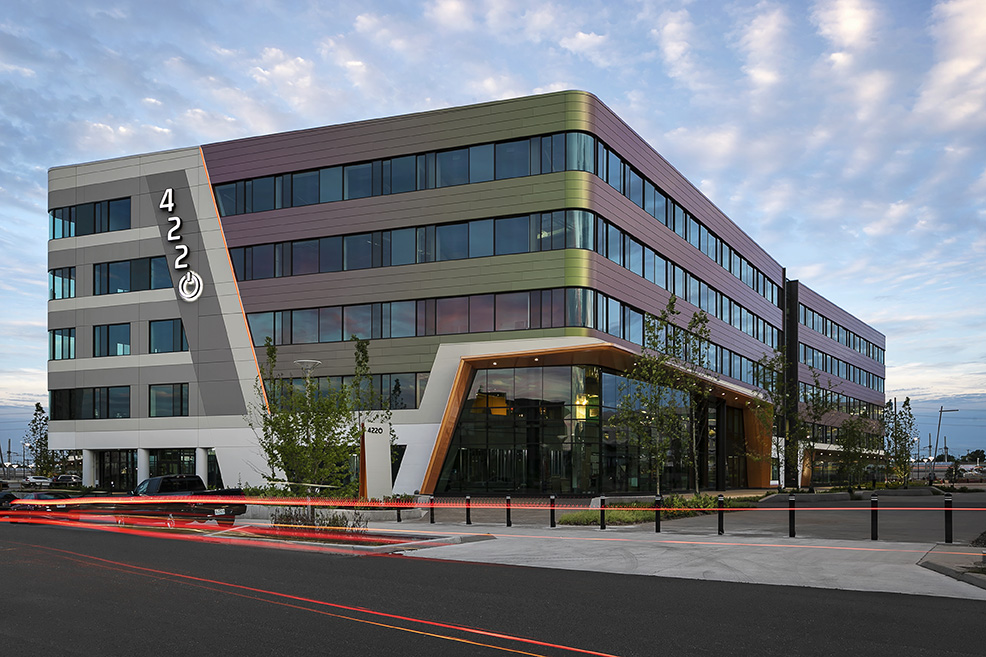
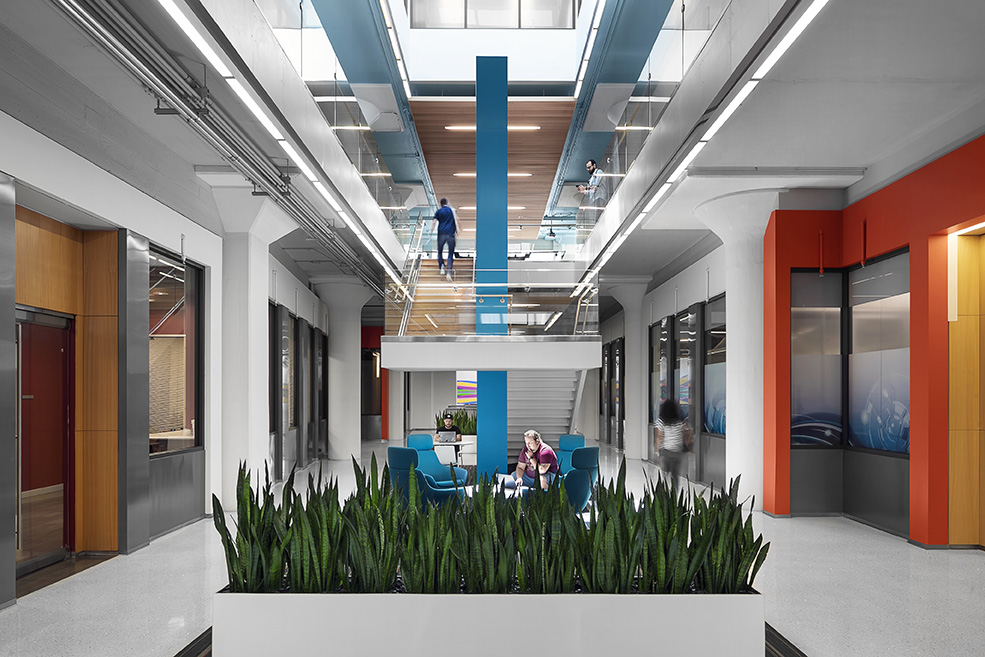
Aesthetic and Arroyo
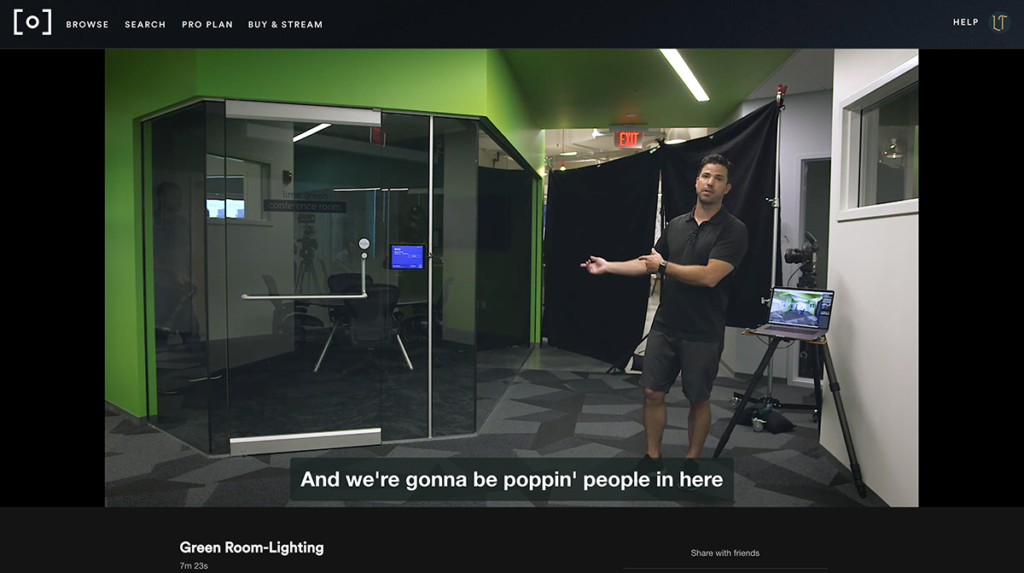
Tony'due south architectural photography tutorial is focused around shooting one large corporate infinite. Using a adequately lean kit of gear, Tony manipulates light (natural, applied, and bogus) and employs Barry Mackenzie's meticulous retouching techniques to brand ultra clean and render-esque photos.
Noteworthy Skills and Techniques Learned
- Using strobes to produce clean colors and crisp low-cal
- Adding models into architectural scenes
- Lighting large commercial exteriors
- Compositing multiple frames together in Photoshop
- Using fill layers and gradients for pristine coloring and retouching
- What to look for in a scout trip
- How to marketplace yourself as an architectural photographer
- How to cost a large scale commercial/corporate compages job
- How to navigate cost-sharing
- Sitting downwards in a brief with a existent architect and translating what they need into an actionable shot list
Postal service Processing
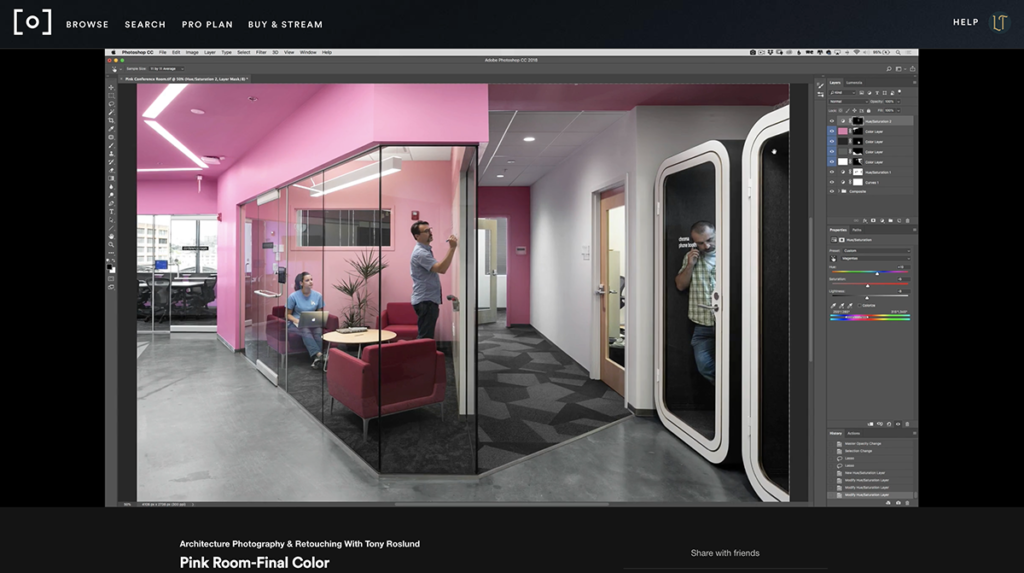
What I dear well-nigh about this tutorial is the incredible corporeality of knowledge you are getting on the mail service-processing forepart. You get to come across Barry Mackenzie do the burden of the compositing and retouching piece of work on each file, and then Tony come in and put the finishing touches and shine on the photograph. Just every bit with the PRO EDU real estate photography tutorial, the course includes the raw files you can edit along with, also as Tony'due south finished images for you lot to reference. Some post processing techniques you tin look to pick up here are:
- Using gradients, masks, and intricate pen paths to composite images together
- Fill layers to hide distracting elements and create perfect colors
- Using different alloy modes
- Lumenzia for generating precise luminosity masks
Format
Again, every bit with all PRO EDU tutorials, you have the ability to purchase the tutorial once or subscribe yearly for unlimited tutorial access. It tin be downloaded or streamed, and can be watched in PRO EDU's easy to navigate app. Tony's class comes with a pre-production planning list, Tony's rate sheet, sharpening actions, and the RAW files to edit along with.
Shortcomings
My list of grievances is pretty pocket-sized. This tutorial is filmed in one location so the techniques get a little repetitive. The business concern and pricing videos offer some good ideas to implement just are a little sparse in the details. Ultimately though, the biggest shortcoming I observe with this tutorial is purely a personal preference.
I'm non a big fan of PRO EDU'southward format where all of the shoot portion is grouped together, and and so all of the retouching portion is grouped together. I prefer watching the lesson on location and so jumping right into the post-production for that scene. However, that is 100% only how my brain works, and tin can easily be resolved by just clicking through the menu options in the PRO EDU app to bound betwixt "photoshoots" and "retouching." Their new app makes this manner easier to navigate than their erstwhile site.
Bottom Line
This is a corking tutorial for someone who understands the full general principles of architectural photography and wants to focus in on corporate spaces. I would too recommend information technology to anyone who wants to learn improve editing and post-processing techniques.
Where Art Meets Architecture
The Where Art Meets Compages series is a set of three architectural photography tutorials taught by Mike Kelley. This series is produced and sold by the photography web log, Fstoppers.
Fstoppers tutorials are a 1 time buy where the videos are delivered to y'all via download link. Purchasing any WAMA tutorial places you into the Where Art Meets Architecture With Mike Kelley Facebook group, which is like a bonus gem. While PRO EDU also offers access to a Facebook group when you lot buy from them, Mike's is strictly architectural photography and in that location is so much niche knowledge being passed around there.
In all 3 of the WAMA serial, I appreciate Mike's no-fuss attitude and his lack of pretentiousness. There's a lot of "doing things to taste" and "eyeballing it," all while picking up real architectural terms and learning the theory and fundamentals behind both compages and photography. Mike is a tremendous teacher and has so much knowledge to offer.
Each tutorial runs $299 but there are bundle deals where y'all receive discounts for purchasing multiple tutorials at a fourth dimension. Fstoppers is running a sale on educational videos right now (thanks, pandemic) where you go $xc off.
WAMA i
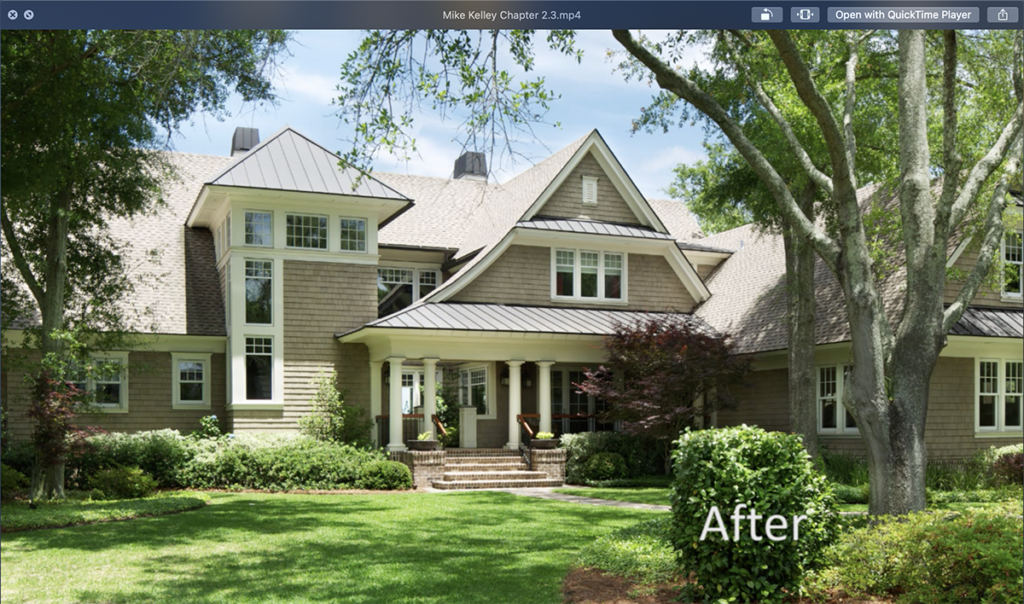
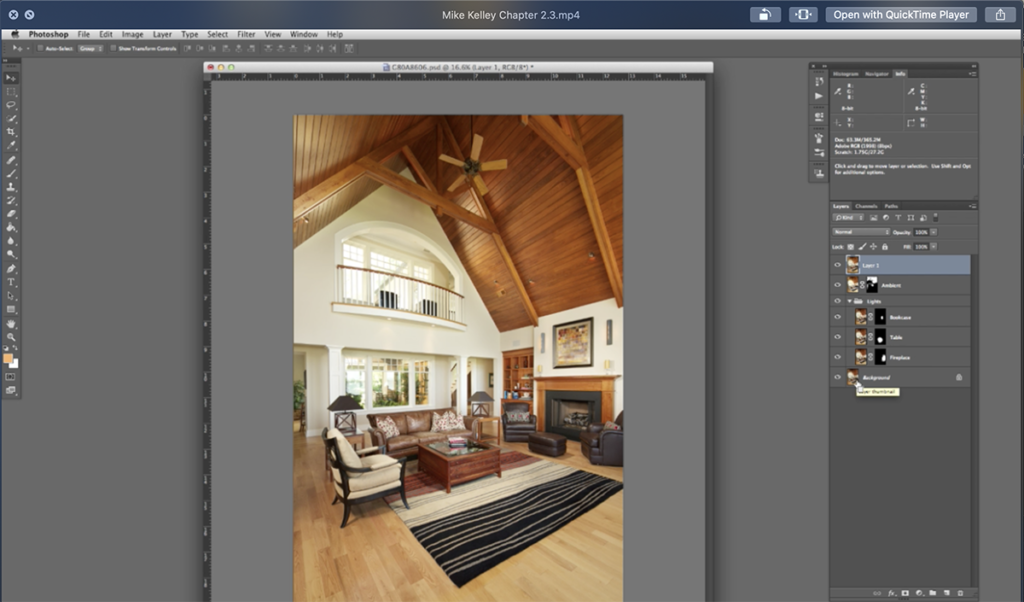
Many years ago, Mike Kelley'south Where Art Meets Architecture ane was the showtime architectural photography tutorial I purchased, and after watching it, I felt similar I had unlocked all of the knowledge in the universe. This tutorial is a cracking introduction to using flash in high end existent estate and architecture photography. It'southward besides a solid introduction to compositing in photoshop, but is a flake more circuitous than Barry Mackenzie'south Real Estate Photography & Retouching, as y'all are compositing together quite a few frames of ambient light and flash pops. Looking back, I do remember this tutorial is a little bit dated in terms of the flashy, hyper-realistic twilight exteriors, simply the principles y'all're learning are a bully foundation and tin can parlay into the more subdued await that Mike teaches later in the serial.
Gear
In this tutorial, Mike uses a Canon 1D and a mix of tilt-shift and zoom lenses. Quite a few speed lights are thrown into the mix, as well as a hot light for calorie-free painting exteriors. What's nice is that Mike shows how these techniques tin can be achieved fifty-fifty on entry-level gear, doing the i of the hero twilight exterior shots with a Canon Insubordinate and kit lens.
Artful & Approach
This tutorial primarily teaches compositing together artificially lit scenes. Stylistically, this tutorial leans towards relatively evenly lit interiors for the high-end real estate portion, and trends flashy / hyper-realistic for the bars, restaurants, and twilight exterior images. As I mentioned above, information technology feels kind of dated now but the principles found here can exist applied to gustatory modality for any architectural shoot or fashion.
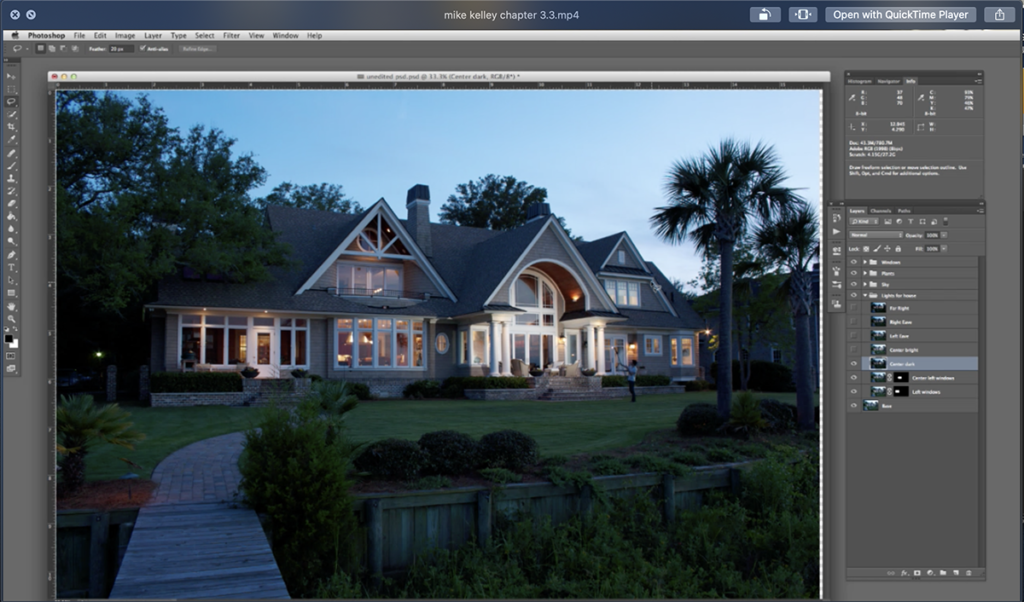
Noteworthy Skills and Techniques Learned
- Compositing together flash and ambient frames
- Twilight outside shots
- Lighting circuitous spaces
- Calorie-free painting
- Window pulls
- An intro to marketing, licensing, and pricing
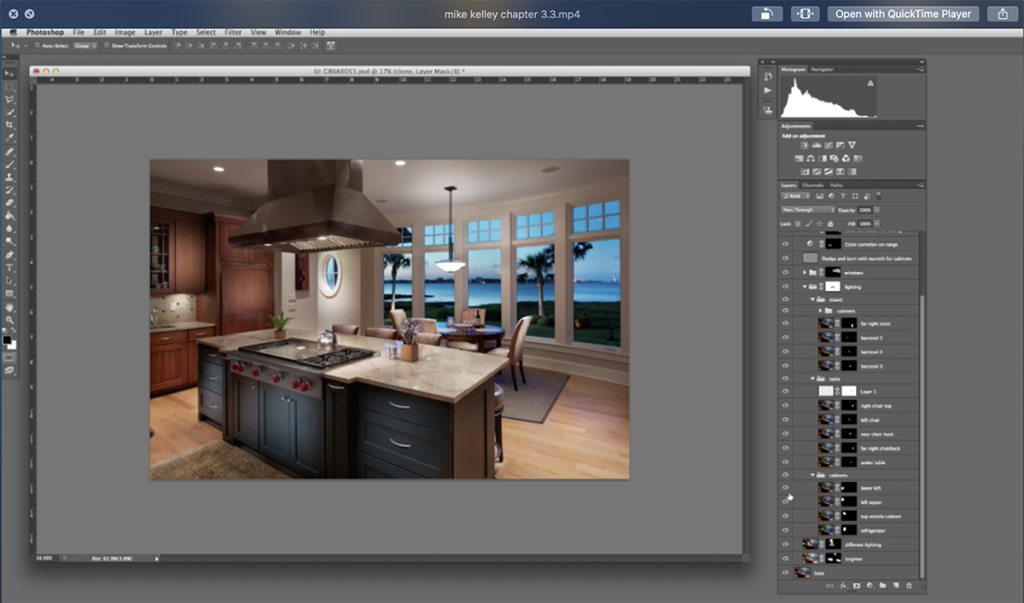
Post Processing
- Y'all receive files to edit along with
- A slap-up introduction to the principles of compositing
- Learning to utilise blending modes and the pen tool
- Replacing objects in photoshop
Format
This tutorial is purchased outright and delivered in a cypher folder via a download link. You can sentinel the mp4 files in QuickTime or Windows Media Histrion if that's your thing. I ended up dragging them into iTunes originally, and then I could watch them uninterrupted in a playlist. Now that information technology'due south 2020, you tin drag them into the Apple TV app where they'll live in the Home Videos tab (more on this to come up). WAMA 1 includes 1 PSD file of a twilight exterior image for yous to follow forth with. What I love about the format of this tutorial is that each image y'all see shot, flows right into the editing lesson then that it's fresh in your mind, and you tin can see the applied application of what you just did.
Shortcomings
There's one overarching thing that I dislike about all of the Where Art Meets Architecture tutorials; the delivery format feels pretty archaic. While really "owning" the mp4 file is oddly satisfying, information technology's cumbersome to scout and flip between lessons — especially in a world where nobody even wants to click a button to say "Yes I'm Still Watching." The downside of a physical file over streaming is that it's easily lost, specially once the download link expires. In terms of technique, I do think this is stylistically dated at present, only at the fourth dimension, this was the female parent of all aesthetics. This technique relies on lugging around a lot of gear and spending a lot of time flashing every object in the scene. It only comes with i PSD file to follow along with.
Bottom Line
Mike Kelley'south Where Art Meets Architecture one is a powerful introduction to the world of architecture photography and the fundamentals of lighting, composing, and compositing spaces. If you're looking to learn the principles of architectural photography and larn how to composite together more complex lighting techniques, this would be a expert tutorial to starting time with. If y'all have a better handle on lighting techniques, or hope to achieve more natural looking architectural photography images, you lot could skip this one and option upwardly WAMA 2 instead.
WAMA 2
Mike Kelley'south Where Art Meets Architecture 2 is the second installment in the Fstoppers WAMA series. This class focuses on photographing luxury homes and employs a fleck more of a natural feel to the images than WAMA 1. You're even so using compositing and blending ambient and bogus low-cal, but things experience a fleck more subdued here and really focuses on letting the compages do the talking. In my humble stance, this is the most powerful of the Where Art Meets Architecture videos.
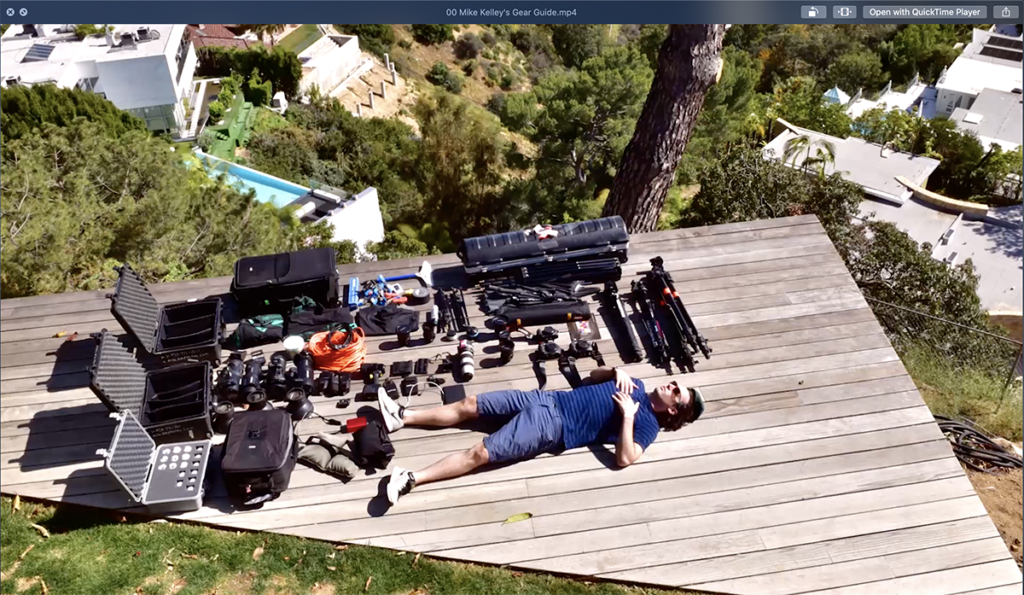
Gear
The first of this tutorial shows an insane gear kit, but actually what Mike ends up shooting with throughout the tutorial seems pretty minimal. Primarily, he's using a Catechism 5dsr, the Canon 24mm tilt-shift lens, Lowel GL-one hotlight, and Profoto D1 or B1 with dazzler dish, and scrims.
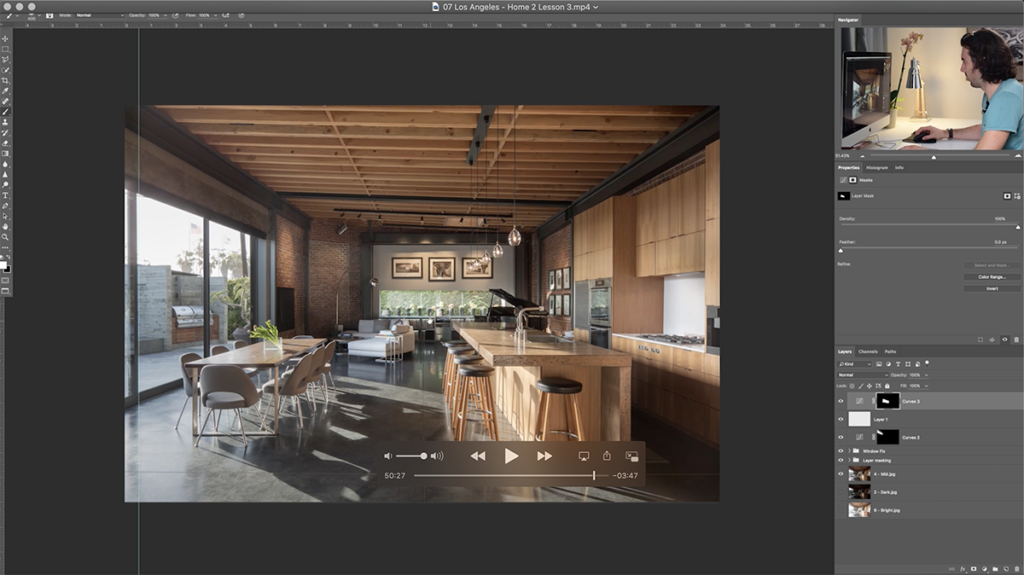
Aesthetic & Approach
Where Fine art Meets Architecture two focuses on photographing luxury residential compages and stylistically feels natural and modern. Y'all can nonetheless wait to be enhancing the calorie-free in each scene with a hotlight or strobe, but merely to pull out important details or combat tricky lighting scenarios. This tutorial teaches how to capture the mood and qualities of these homes without distracting as well much from them.
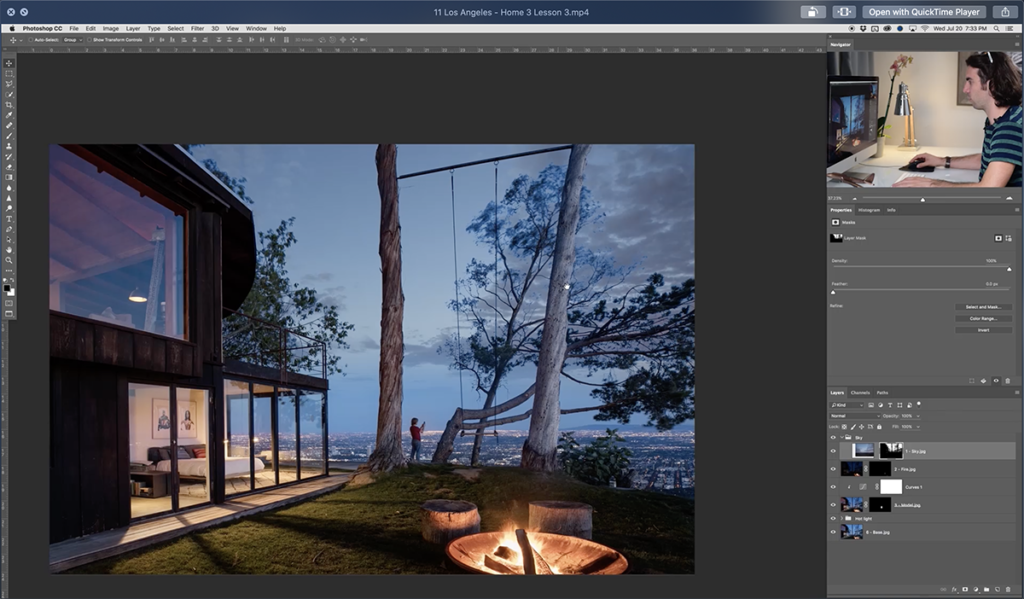
Noteworthy Skills and Techniques Learned
- Compositing together ambient and flash frames
- Using a hot low-cal for light painting
- Setting upward multiple cameras to maximize twilight shots
- Grass and sky replacements
- Scheduling your shoot and planning around the dominicus
- Shift & Stitch to go a wider focal length out of your lens
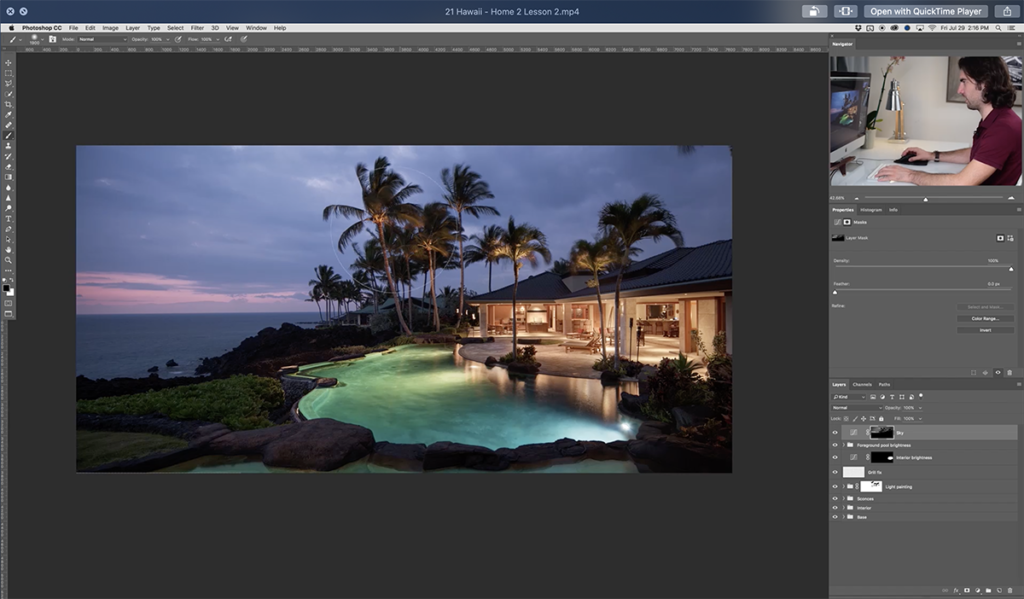
Post Processing
Equally mentioned earlier, this tutorial primarily teaches how to achieve a more than natural look to your images by blending ambient exposures with applied lights on and bogus light. Y'all tin also expect to meet:
- An intro to luminosity masking
- Tricks for cleaning upwards distractions including using gradients and cloning
- Different techniques for sky replacements
Different WAMA ane, in this course, you lot'll receive files to edit forth with for each and every lesson. They are but jpegs, but for learning purposes, it doesn't matter.
Format
As with all the other Fstoppers tutorials, you lot receive WAMA 2 through a digital download. This grade includes files to edit in tandem with each lesson. I find that the format of Mike's tutorials, where you spring right from the shoot into the postal service processing, is the all-time for my learning style and shows the practical applications of what I just learned.
Shortcomings
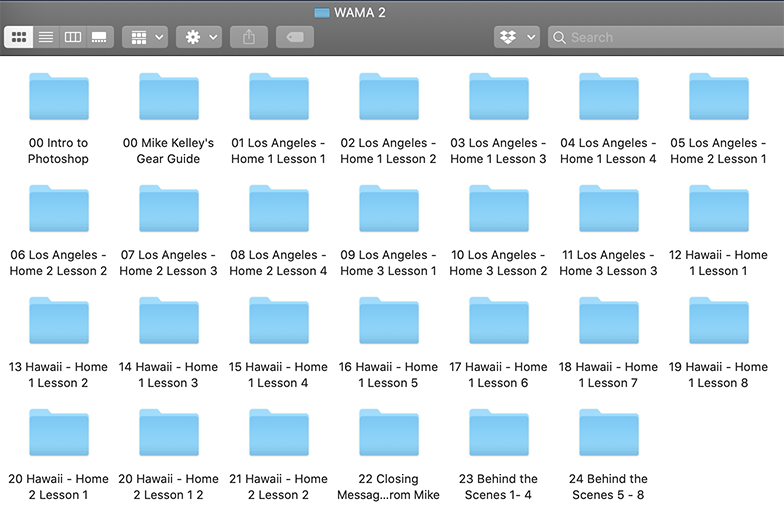
Not to beat a dead horse, but the commitment format of the tutorials is my biggest hang upwardly. You accept to spend 7,000 years unzipping folders and dragging them into the TV app (if y'all're on Mac). Apple tree is always improving, so their preferred viewing applications are always changing. iTunes inverse to Movies which changed to TV, and every time, I had to redownload and sync up WAMA across all the devices I wanted to watch it on.
Bottom Line
WAMA ii is probably my favorite of Mike & the Fstoppers gang'due south tutorials. It teaches how to achieve a timeless style across various lighting conditions and different types of residential architecture. While Fstoppers brands information technology equally an "advanced" class, I would recommend information technology to anybody at any level in their career, as Mike teaches how to brand these images step by step.
WAMA 3
Last in the lineup is Mike Kelley's Where Art Meets Architecture 3. WAMA three is unique, in that while information technology does teach the techniques of photographing spaces for hospitality, I would say this tutorial has more benefit on the business side of things. As far as lighting and technique go, it's nothing extraordinarily different from WAMA two. Mike's dissection of pricing, bids, and the legalities of working internationally are the real gems of this form.
Gear
As with WAMA 2, the gear existence used is primarily a Canon 5dsr, the Catechism 24mm tilt-shift lens, Canon 17mm tilt-shift lens, Lowel GL-i hotlight, and Profoto D1 or B1 with dazzler dish, also as scrims.
Aesthetic and Approach
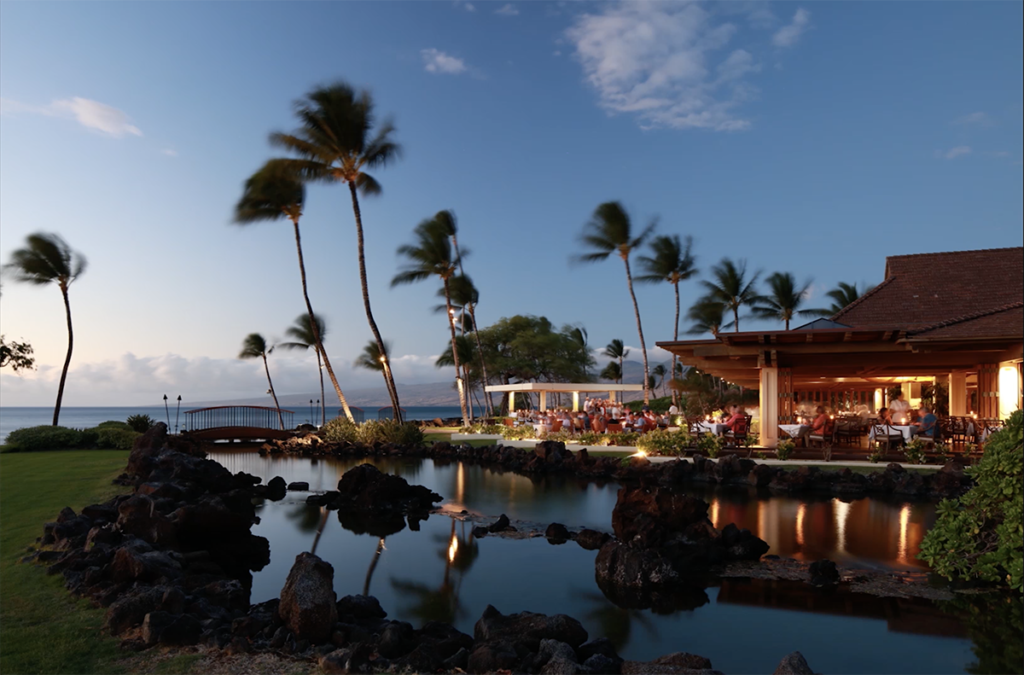
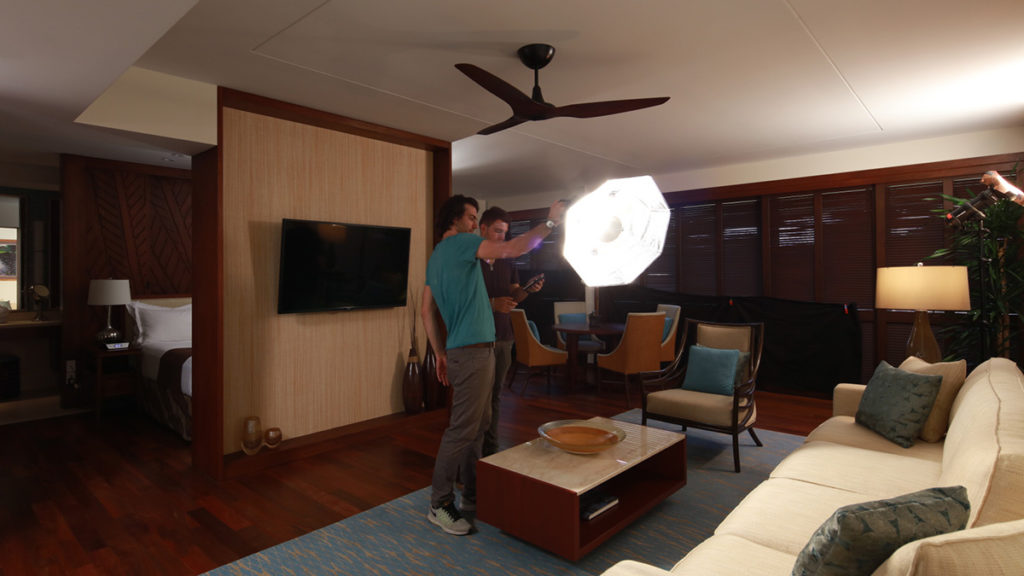
This tutorial caters to those who are learning to shoot hotels or luxury architecture. It is a bit on the flashier side of things and aesthetically achieves a render-like feel that y'all would expect to come across on a hotel website or brochure. There is a LOT of artificial lighting used in some of these lessons, while in others it's au naturel.
Noteworthy Skills and Techniques Learned
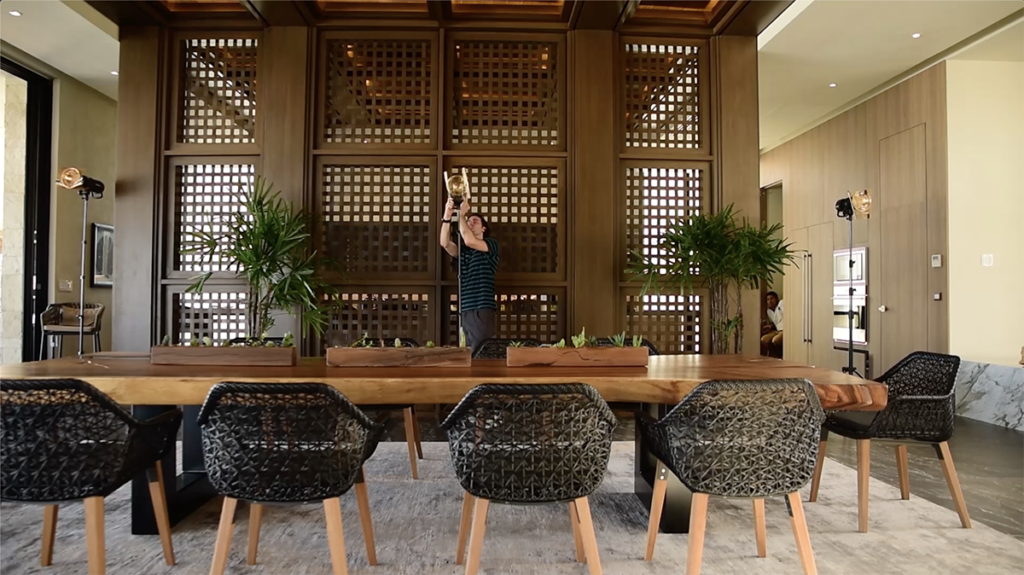
WAMA 3 does go over some new shooting and post-processing techniques, only ultimately it builds on and harnesses the foundations you learned in WAMA i & 2, or may accept picked up in either PRO EDU tutorial. The true dazzler of WAMA three though, is the in-depth explanations and aboveboard communication that Mike gives on the business end of being an architectural photographer. Yous can await to learn near:
- Styling tips for mutual hotel issues
- Lighting expansive exteriors
- Aeriform photography in helicopters
- Understanding bids and making proposals based on real email inquiries
- Simple residential architecture bids
- Circuitous multi-day bids including travel
- Bidding for high budget advertising campaigns
- Managing travel fees and the legalities of international travel for business
- Licensing fees
- The nuances of marketing yourself depending on where you are in your career and your goal customer
- Creating a portfolio
- Building a website
- Cold calling vs high-finish mailers
- Personal Projects
- Selling fine art to make residual income
Post Processing
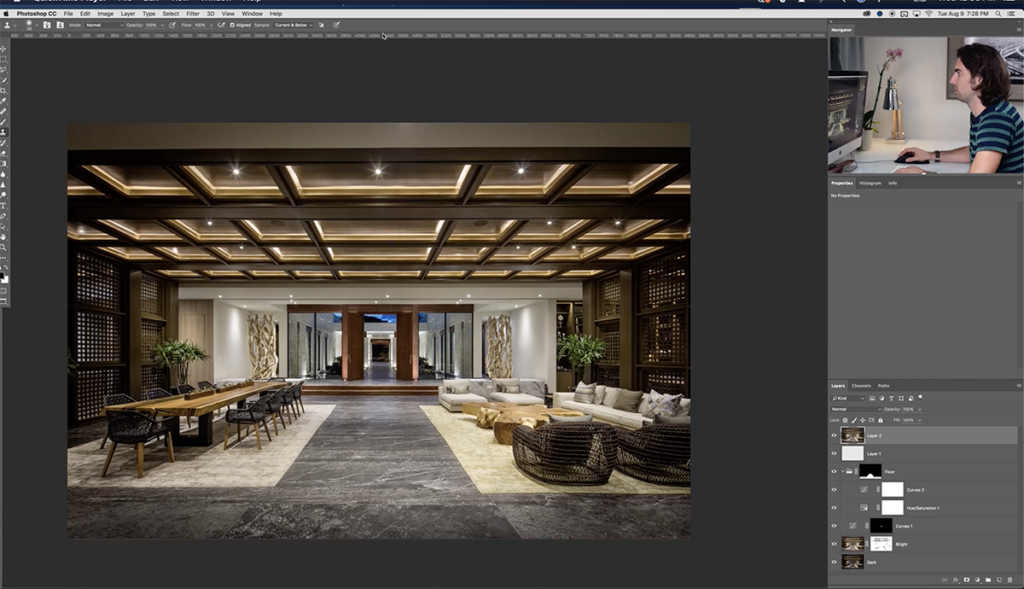
The post-processing techniques hither range from ultra-minimal 1 photo "touch-ups" to circuitous composites that alloy natural ambience frames + applied lights + flashed frames + lite painting. Relying heavily on the same techniques taught in the first and second serial of Where Art Meets Architecture, there isn't anything globe-shatteringly new here except for the introduction of Frequency Separation for handling intricate texture and color cleanup, and using the vanishing point clone tool. As always, you receive files to edit along with.
Format
As with its predecessors, this tutorial is delivered in a series of MP4 format videos delivered via a download link. It includes high resolution JPEG files for y'all to edit forth with during the lessons.
Shortcomings
Likewise hating that this series can't be streamed, I do observe that the technique lessons outset to experience a bit repetitive after a while. Perhaps that's just because information technology'southward the concluding tutorial in the serial though!
Bottom Line
If shooting polished brochure worthy images for hospitality is one of your goals, this is the tutorial for you. It likewise is great for learning how to handle difficult lighting issues that arise when shooting high-end interiors. The true do good of this tutorial though, is the business advice that is offered. If yous are struggling with bidding jobs, determining what to accuse, or are stressed out by the back end of your photography business, you will observe Where Art Meets Architecture 3 incredibly helpful.
Wrap Upwardly
Long story short, all of the major architectural photography tutorials out there are unique. They span across different styles and time peroids, industry niches, and harness different techniques. In a perfect world, you would own and watch each of them. Picking up any one of these courses will impart some nugget of knowledge to you.
Remember, at the end of the day, the best way to learn is to go out and practice. Put the techniques you're learning from these tutorials into action, whether it'southward in your own house, or on an upcoming job!
If you made it this far, I promise this write upward helps you navigate our little corner of the wide world that is photography instruction. Is there some other architectural photography tutorial that you love? Whatsoever techniques you'd similar to see taught? Drop me a line in the discussion below!
Source: https://apalmanac.com/review/which-architectural-photography-tutorial-should-you-buy-9449
0 Response to "Fstoppers ââ“ Mike Kelleys Where Art Meets Architecture 3"
Enregistrer un commentaire